
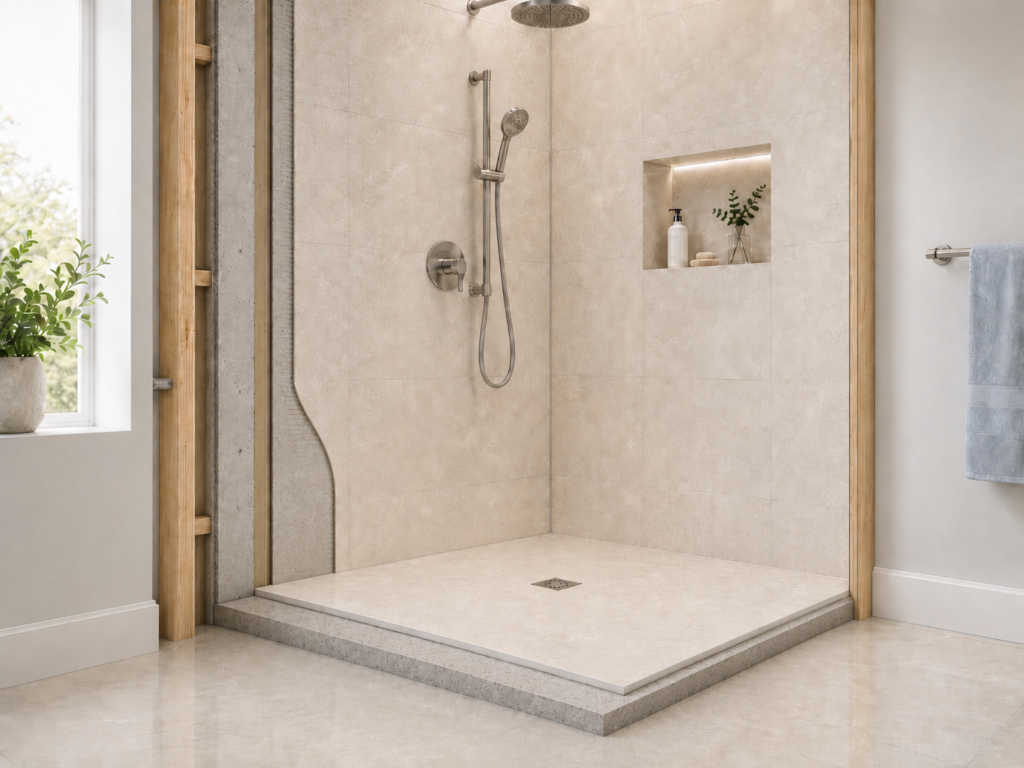
A beautiful shower finish is easy to notice. Clean wall panels, fresh tile, modern fixtures, and glass doors can completely change the look of a bathroom.
But the part that matters most is often the part homeowners never see.
Behind every long-lasting shower is proper preparation and waterproofing. Without it, even the nicest finish can fail early. Water can move behind walls, around corners, near the drain, or through small gaps that look harmless at first.
That is why shower waterproofing matters more than the final surface. The finish gives the shower its style. Waterproofing protects the home.
Image idea: Modern shower replacement with clean wall panels, glass door, and bright bathroom lighting.
Why Water Always Finds Weak Spots
Water does not need a large opening to cause problems. In a shower, moisture is constant. Every day, water hits the walls, runs down corners, collects near the base, and moves around plumbing fixtures.
Over time, even small weak spots can become serious issues.
Common weak points in a shower include:
- Corner seams where two walls meet
- Edges between shower panels or tile sections
- Openings around the shower valve and fixtures
- The connection between the shower wall and shower base
- The drain area
- Old grout, cracked caulking, or poorly sealed edges
The problem is that water damage usually starts quietly. A shower can look fine on the outside while moisture is already getting behind the surface.
That is why a shower replacement should not be treated as just a cosmetic update. The visible finish is only one part of the system.
Tile and Shower Panels Are Not the Whole Waterproofing System
Many homeowners assume that tile, grout, or shower wall panels are what make the shower waterproof.
They help, but they are not the full solution.
Tile is durable, but grout can absorb moisture over time. Wall panels can create a clean, low-maintenance surface, but they still need proper seams, backing, and installation. Even high-quality materials can fail if the wall behind them is not prepared correctly.
A reliable shower system depends on several layers working together:
- Solid wall backing
- Proper surface preparation
- Waterproofing protection
- Sealed corners and seams
- Correct shower base installation
- Clean fixture openings
- Professional finishing details
When these steps are done correctly, the shower is built to handle daily water exposure. When they are skipped, the finish may look good for a while, but problems can show up later.
Important: The shower finish creates the look, but the waterproofing system protects the home. A beautiful surface does not matter much if water can get behind it.
What Can Happen Behind Tile or Panels
Water damage behind a shower is frustrating because it is often hidden until it becomes expensive.
A homeowner may first notice small signs like a musty smell, soft caulking, loose tile, stained walls, or swelling near trim. In some cases, the issue is not visible until the shower is opened up during a replacement.
Poor waterproofing can lead to:
- Mold or mildew behind the shower walls
- Soft or damaged drywall
- Rot around framing or subfloor areas
- Loose tile or failing panels
- Stains on nearby walls or ceilings
- Bad odors that do not go away
- Higher repair costs later
The shower finish may be the part you see every day, but the hidden wall system is what protects the structure of the bathroom.
That is why proper waterproofing is not an extra detail. It is one of the most important parts of the project.
Image idea: Cutaway-style shower wall showing waterproofing layers behind the finished surface.
Why Cheap Cosmetic Updates Can Fail
A low-cost shower update may seem attractive at first, especially if the current shower just looks outdated. But if the project only focuses on appearance, it can miss the real condition of the wet area.
Some quick updates simply cover the old surface without fixing what is underneath. That may improve the look for a short time, but it does not always solve moisture problems, weak backing, bad seams, or old damage.
Cheap cosmetic updates can fail when:
- Old damaged material is covered instead of removed
- The wall backing is not checked
- Waterproofing steps are skipped
- The shower base is not installed correctly
- Corners and seams are sealed poorly
- Plumbing openings are not protected
- The contractor focuses only on the final look
A shower is one of the wettest areas in the home. It needs to be treated like a water-control system, not just a design feature.
Proper Prep Saves Money Long-Term
A quality shower replacement is not only about making the bathroom look better. It is about building something that lasts.
Proper preparation can help prevent expensive problems later. This includes removing the old wet-area materials, checking what is behind the walls, repairing damaged areas if needed, and installing the new shower system correctly.
Good preparation helps protect:
- The walls behind the shower
- The base and drain area
- The corners and seams
- The surrounding bathroom surfaces
- The overall value of the home
This is especially important for homeowners planning to stay in the home for many years. A shower that looks good on day one should also perform well after daily use.
A better finish is nice. A better foundation is what makes the finish worth it.
Simple rule: If the shower is not properly prepared before the finish goes on, the final look may not last.
The Finish Still Matters — But It Comes Second
This does not mean the shower finish is unimportant. The finish affects the style, cleaning routine, comfort, and overall feel of the bathroom.
Homeowners still need to choose materials that match their goals. Some people want a clean modern shower with large wall panels. Others prefer a tile-style look, glass doors, built-in shelves, or low-threshold entry.
But the best shower projects balance both sides:
- The finish creates the look.
- The waterproofing protects the investment.
A beautiful shower with poor waterproofing can become a problem. A properly built shower with the right finish can give the homeowner both style and peace of mind.
What Homeowners Should Ask Before Hiring a Contractor
Before hiring someone for a shower replacement, it is worth asking a few simple questions. These questions can help you understand whether the contractor is only focused on appearance or whether they are thinking about the full wet-area system.
Questions to ask before starting a shower replacement:
- What happens behind the walls during the replacement?
A good contractor should be able to explain how the old materials are removed and how the wall area is prepared. - How do you handle waterproofing?
The answer should be clear, not vague. Waterproofing should be part of the plan. - What areas are most important to seal?
Corners, seams, fixture openings, and the base connection should all be considered. - What if hidden damage is found?
It is important to know how the contractor handles moisture damage, soft walls, or other surprises. - Is this a full wet-area replacement or just a surface update?
Homeowners should understand exactly what is included. - What materials will be used for the walls, base, and finishing details?
Material quality and installation quality both matter.
These questions can help you avoid choosing a contractor based only on the lowest price or the nicest photo.
Image idea: Contractor preparing shower walls before installing the final panels or tile.
Why This Matters for Shower Replacement Projects
A shower replacement is a major improvement to the bathroom, but it is also a protective upgrade. The wet area needs to be built carefully because it deals with water every single day.
When the waterproofing is done right, the finish has a better chance to last. The walls stay protected, the seams stay stronger, and the homeowner has less risk of hidden moisture problems.
That is why at FreshFit Bath & Shower, the focus is not just on making the shower look new. The goal is to build a clean, functional, properly prepared wet area that is made for daily use.
Whether you are replacing an old shower, converting a tub into a shower, or updating a worn-out wet area, the work behind the finish matters.
Thinking About Replacing Your Shower?
If your shower looks outdated, has failing caulk, damaged walls, or you are simply ready for a safer and cleaner wet area, FreshFit Bath & Shower can help.
We specialize in shower replacements, tub-to-shower conversions, and wet-area bathroom upgrades for homeowners in Vancouver, WA and nearby areas.